
Alp Şeker
Dec 30, 2025
5 min read
Ethical UX Design: When Friction Protects User Choice
Good UX removes effort that does not help the user. Ethical UX also asks whether making an action easier improves the user’s outcome or only the product’s conversion rate. A smooth flow can hide consequences when fees, recurring terms, privacy choices or irreversible actions pass too quickly. Intentional friction is a purposeful pause, review step or disclosure that helps someone understand and control a consequential decision. The goal is not to make products harder to use; it is to remove unnecessary cognitive effort while preserving informed choice.

What ethical friction means
Intentional friction can be a confirmation screen, a clear comparison, a cooling-off period, an undo option or an explicit consent choice. It should protect the user from foreseeable harm—not pressure them, exhaust them or block them from leaving. The ethical test is simple: would we still add this step if it reduced conversion but improved understanding or control? Friction that protects a person is different from friction that protects a business metric, such as making cancellation difficult while making sign-up effortless.

Cognitive ease is not the enemy
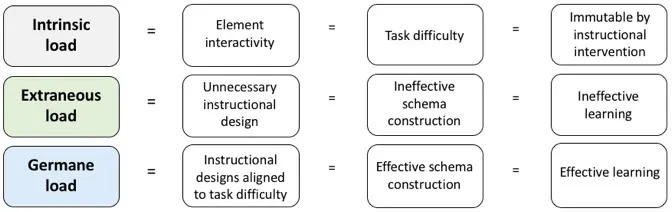
Reference: Giuliano Orrù and Luca Longo, ‘The Evolution of Cognitive Load Theory and the Measurement of Its Intrinsic, Extraneous and Germane Loads: A Review,’ 2019.
Use cognitive-load terms carefully
The three-part model below comes from instructional design. It can help teams discuss effort, but it should not be used to label all friction as harmful or all mental effort as beneficial.
Intrinsic load
The difficulty inherent in the task. Comparing insurance plans or configuring permissions is genuinely complex; a designer can explain and sequence that complexity without pretending it does not exist.
Extraneous load
Effort created by the presentation rather than the task: unclear labels, hidden controls, inconsistent patterns or unnecessary steps. Removing it generally improves usability.
Decision-relevant effort
Some decisions require attention: reviewing a total price, understanding what data will be shared or checking the effect of a permanent action. In ethical UX, this is clearer than calling all such effort ‘germane load’ or ‘good friction.’
The design goal is selective: remove interface noise, explain unavoidable complexity and preserve the effort required to understand material consequences. A flow is not ethical merely because it is fast, and it is not protective merely because it contains more steps.
Practical example: a transparent checkout
A food-delivery checkout should show the item subtotal, service fee, delivery fee, tip and final total before the purchase button. If a promotion becomes a paid subscription, the renewal date and price should appear beside the choice—not only in terms and conditions. A review screen is useful friction because it makes the consequence visible while the user can still change course.

Practical examples beyond checkout
For destructive actions, name exactly what will be deleted, require confirmation when recovery is impossible and provide undo when it is possible. For privacy consent, give accept and reject choices comparable prominence and explain the effect of each option. For financial or healthcare forms, present a plain-language summary before submission and let people correct mistakes without starting again. These pauses protect choice because they are proportional to the risk.
An ethical UX checklist for product teams
Before removing or adding friction, document the user risk, the business incentive and the evidence behind the decision. Check whether users can see the price, commitment, data use and reversibility before acting; whether alternatives and exit routes are easy to find; whether the pause is proportional to the consequence; and whether the design supports comprehension rather than merely adding clicks. Test under realistic time pressure, device constraints and account states. Measure errors, regret, cancellation and support demand—not only completion speed or conversion.
